Gladiolus permeabilis edulis
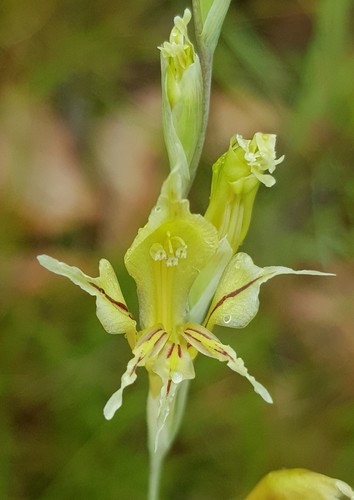
At a glance
- Exposure
- Full sun
- Frost limit
- −6.7 °C
Cultivation
Prefers a sunny sheltered position in a light sandy neutral to slightly acid soil. Requires a stony gritty loam. This plant is sometimes considered to be a distinct species, G. edulis. It is said to inhibit the growth of legumes.
Propagation
Seed - sow early spring in a greenhouse at 15°c. Sow the seed thinly so that the seedlings can be grown on in the pot without disturbance for their first year, giving them an occasional liquid feed to ensure they do not become nutrient deficient. Pot up the small bulbs when they are dormant in the autumn, placing about 2 - 3 bulbs in each pot. Grow them on for another year or two in the greenhouse and then plant them out in late spring. Division. Dig up the corms in October, dry them in well ventilated conditions at about 20°c and then store them in a cool but frost-free place over the winter, planting them out about 10cm deep in April. Cormlets harvested when digging up the corms in the autumn can be stored in a similar manner to the corms. Larger cormlets can be planted out in spring, smaller ones may be best grown on for a year in the greenhouse.
Edible uses
Corm - cooked.
Habitat
Stony ground.
Native range
S. Africa - Cape Province.