Kentucky Coffee Tree (Gymnocladus dioica)
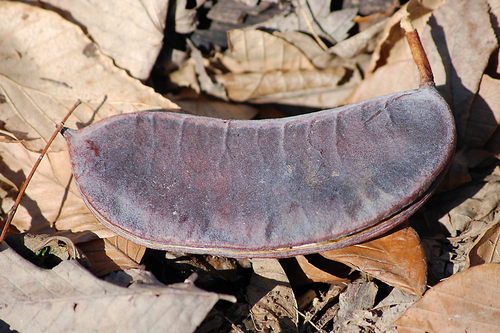
At a glance
- Lifecycle
- Perennial (hardy)
- Exposure
- Full sun
- Frost limit
- −34.4 °C
Cultivation
Requires a deep rich soil and a sunny position. A very cold-hardy plant, tolerating temperatures down to about -30°c. A very ornamental, making it a good tree to use for the top canopy of a woodland garden. Dioecious. Male and female plants must be grown if seed is required. Unlike most members of the Leguminosae, his species does not form nodules of nitrogen-producing bacteria on the roots.
Propagation
Seed - best sown in a greenhouse as soon as it is ripe. Make sure the seed has swollen after soaking, soak it again if it has not and, if it still does not swell, try filing away some of the seedcoat but be careful not to damage the embryo. As soon as they are large enough to handle, prick the seedlings out into fairly deep individual pots and grow them on in the greenhouse for at least their first winter. Plant them out into their permanent positions in late spring or early summer, after the last expected frosts. Consider giving them some protection against the cold for their first couple of winters outdoors Root cuttings 4cm long and 1cm thick in a greenhouse in December. Good percentage.
Edible uses
Seedpod - raw or cooked. The roasted seeds can be eaten like sweet chestnuts. The roasted seed is a caffeine-free coffee substitute. Seed - roasted and eaten like a nut. The seed contains toxic substances, see notes above.
Medicinal uses
The pulverised root bark is used as an effective enema. A tea made from the leaves and pulp from the pods is laxative and has also been used in the treatment of reflex troubles. A decoction of the fresh green pulp of the unripe fruit is used in homeopathic practice.
Material uses
The fruit is high in saponins and is used as a soap. The leaves are used as a fly poison. Trees are planted on the spoil tips of mines to stabilize and reclaim the soil. Wood - coarse-grained, heavy though not hard, strong, very durable in contact with the soil, finishes to a fine lustre. A handsome wood, it weighs 43lb per cubic foot and is used for cabinet work, furniture, construction, fencing etc.
Habitat
Prefers deep rich soils in bottomlands, deep ravines and moist lower slopes.
Native range
Eastern and Central N. America - New York to Tennessee, west to Arkansas and South Dakota.
Scientific synonyms Gymnocladus dioicus