Western sweetvetch (Hedysarum occidentale)
Other names western hedysarum, western sweet-vetch
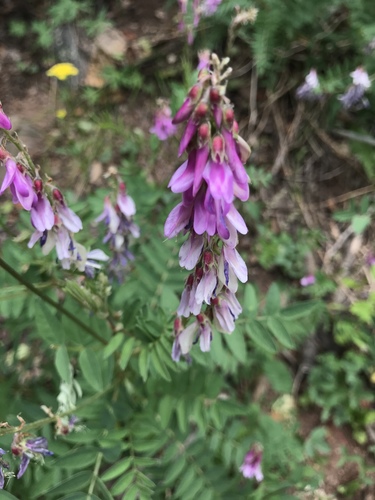
At a glance
- Lifecycle
- Perennial (hardy)
- Exposure
- Full sun
- Frost limit
- −34.4 °C
Cultivation
Easily grown in ordinary garden soil in a sunny position, preferring a deep well-drained sandy loam. Plants strongly resent root disturbance and should be placed in their permanent positions as soon as possible. This species is closely related to H. boreale. Does well in the rock garden or border. This species has a symbiotic relationship with certain soil bacteria, these bacteria form nodules on the roots and fix atmospheric nitrogen. Some of this nitrogen is utilized by the growing plant but some can also be used by other plants growing nearby.
Propagation
Seed - sow in a cold frame as soon as it is ripe or in the spring. Stored seed should be pre-soaked for 24 hours in warm water. Prick out the seedlings into individual pots as soon as they are large enough to handle and plant them out into their permanent positions in the summer. Division in spring. Great care is needed since the plant dislikes root disturbance.
Edible uses
Root - raw or cooked. Used in the spring it is crisp and juicy' but it becomes tough and woody as the season advances.
Habitat
Dry and often rocky soils of open areas, from the plains to about 2,600 metres.
Native range
Western N. America - Montana to Washington, south to Utah and Colorado.