Owls Claws (Helenium hoopesii)
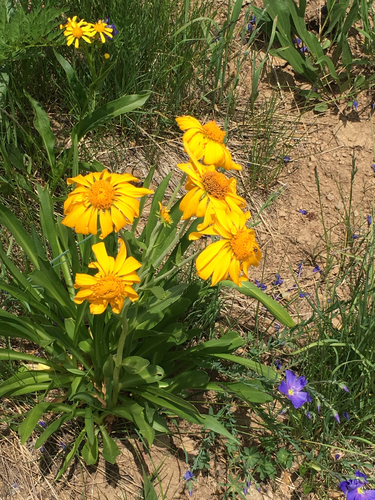
At a glance
- Lifecycle
- Perennial (hardy)
- Exposure
- Full sun
- Frost limit
- −40 °C
Cultivation
Grows well in ordinary garden soil. This species is hardy to about -25°c. Plants seem to be immune to the predations of rabbits. A good bee and butterfly plant.
Propagation
Seed - sow spring in a greenhouse. When they are large enough to handle, prick the seedlings out into individual pots and grow them on in the greenhouse for their first winter. Plant them out into their permanent positions in late spring or early summer, after the last expected frosts. If you have sufficient seed it might be worthwhile trying a sowing in mid to late spring in situ outdoors. Cuttings of soft wood from the base of the plant, June/July in a frame. Basal cuttings in spring. Harvest the shoots when they are about 10 - 15cm long with plenty of underground stem. Pot them up into individual pots and keep them in light shade in a cold frame or greenhouse until they are rooting well. Plant them out in the summer. Division in spring or autumn. Very easy, larger clumps can be replanted direct into their permanent positions, though it is best to pot up smaller clumps and grow them on in a cold frame until they are rooting well. Plant them out in the spring.
Edible uses
A chewing gum is obtained from the roots.
Medicinal uses
The plant is used as a remedy for vomiting. A snuff made from the crushed blossoms and the leaves of Psoralidium lanceolatum has been inhaled in the treatment of headaches and hay fever.
Material uses
A yellow dye is obtained from the flowers.
Habitat
Rich soils in coniferous forests, in meadows along stream sides and on wet slopes, 2250 - 3300 metres in the Southern Rockies.
Native range
South-western N. America.
Same genus
- Yellowdicks (Helenium amarum)
- Arizona sneezeweed (Helenium arizonicum)
- Sneezeweed (Helenium autumnale)
- Bigelow's sneezeweed (Helenium bigelovii)
- Coastal sneezeweed (Helenium bolanderi)
- Shortleaf sneezeweed (Helenium brevifolium)
- Oldfield sneezeweed (Helenium campestre)
- Fringed sneezeweed (Helenium drummondii)