Hemerocallis multiflora
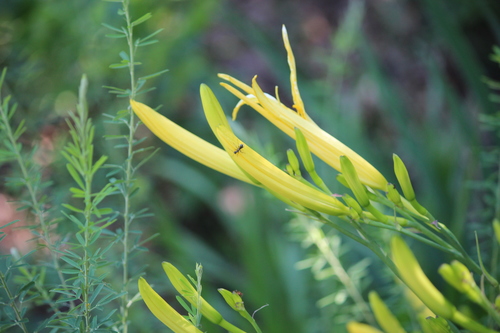
At a glance
- Lifecycle
- Perennial (hardy)
- Exposure
- Full sun
- Frost limit
- −34.4 °C
Cultivation
Succeeds in most soils. Hybridizes freely with other members of this genus. Individual flowers are short-lived but the plant produces a succession of blooms. Each scape carries between 75 and 100 blooms. Plants take a year or two to become established after being moved. Plants seem to be immune to the predations of rabbits. The plants are very susceptible to slug and snail damage, the young growth in spring is especially at risk.
Propagation
Seed - sow in the middle of spring in a greenhouse. Germination is usually fairly rapid and good. Prick out the seedlings into individual pots when they are large enough to handle. Grow the plants on for their first winter in a greenhouse and plant out in late spring[K]. Division in spring or after flowering in late summer or autumn. Division is very quick and easy, succeeding at almost any time of the year[K]. Larger clumps can be replanted direct into their permanent positions, though it is best to pot up smaller clumps and grow them on in a cold frame until they are rooting well. Plant them out in the spring.
Edible uses
Leaves and young shoots - cooked. They must be consumed when very young or else they become fibrous[K]. Flowers and flower buds - raw or cooked. Relatively small for a day lily, but the flowers are crisp with a pleasant sweetness and no aftertaste - they make a delicious addition to salads[K]. The flowers can also be dried and used as a thickener in soups etc. The flower buds contain about 43mg vitamin C per 100g, 983 IU vitamin A and 3.1% protein. Root - raw or cooked[K]. We have found them to be tender but fairly bland with a slight sweetness[K]. The roots are slightly fleshy, with a swollen, tuberous part near the tip. The swollen roots are quite small and are only really worthwhile using if the plant is being dug up for divisions or some other reason[K].
Medicinal uses
The juice of the roots is an effective antidote in cases of arsenic poisoning. A tea made from the boiled roots is used as a diuretic.
Material uses
The tough dried foliage is plaited into cord and used for making footwear.
Habitat
Hill forests and openings in forests on hilltops at elevations of 700 - 1000 metresin China.
Native range
E. Asia - China in Hunan, Japan.