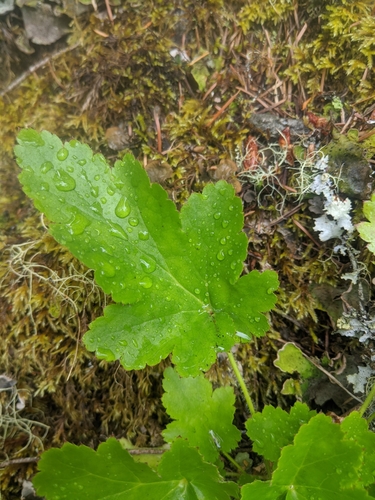
Alum Root (Heuchera diversifolia)
At a glance
- Lifecycle
- Perennial (hardy)
- Exposure
- Full sun
- Frost limit
- −28.9 °C
Cultivation
Succeeds in any good sweet garden soil that does not dry out in spring. Plants are hardy to about -15°c. Apt to hybridize with other members of this genus. This species is probably best treated as a sub-species of H. micrantha.
Propagation
Seed - sow early spring in a warm greenhouse and only just cover the seed. Germination is usually fairly rapid. Prick out the seedlings when they are large enough to handle and plant them out into their permanent positions in late spring or early summer. The seed can also be sown in the middle of spring in an outdoor seedbed and planted out in early summer. Alternatively, you can sow the seed in an outdoor seedbed in the middle of summer for planting out in the following spring. Division in March or October.
Edible uses
Young leaves - cooked. Not very palatable.
Medicinal uses
The root is antiphlogistic, antiseptic, astringent, febrifuge and ophthalmic.
Material uses
The root can be used as an alum substitute, this is a mordant used in fixing dyes. A good ground cover plant for the woodland garden.
Habitat
Moist banks of humus and rocks in woodland below 600 metres, from British Columbia to California. Gravelly banks and rock crevices from low elevations to the sub-alpine zone.
Native range
Western N. America - British Columbia to California