Holy Grass (Hierochloe odorata)
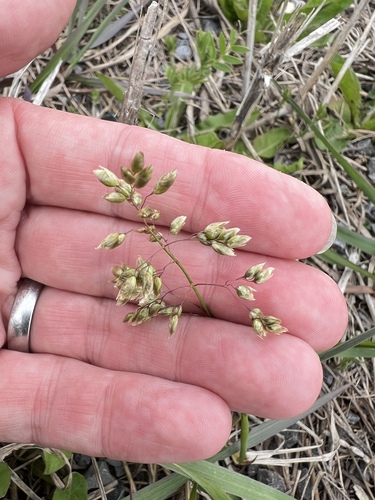
At a glance
- Lifecycle
- Perennial (hardy)
- Exposure
- Full sun
- Frost limit
- −28.9 °C
Cultivation
Prefers a damp position in a rich soil but succeeds in most soils including quite dry conditions. The plants have a running root system and can spread aggressively when grown in suitable conditions. The plant, as it dries, emits a powerful scent of newly mown hay.
Propagation
Seed - sow spring in situ and only just cover the seed. Germination usually takes place within 2 weeks. If the seed is in short supply it can be sown in the cold frame in the spring. When large enough to handle, prick the seedlings out into individual pots and plant them out in early summer. Division in spring or summer. Very simple, virtually any part of the root will regrow to make a new plant[K].
Edible uses
Seed - cooked. Small and fiddly to use. It almost certainly does not contain coumarin and should be safe to use. An essential oil from the leaves is used as a food flavouring in sweets and soft drinks. It has a strong vanilla-like flavour. The leaves are added to vodka as a flavouring. The plant is said to be used as a colouring agent but no more details are given.
Medicinal uses
A tea made from the leaves is used in the treatment of fevers, coughs, sore throats, chafing and venereal infections. Smoke from the burning leaves has been inhaled in the treatment of colds.
Material uses
The dried leaves are used as an incense. The leaves are used to make aromatic baskets. The leaves can be soaked in water to make a tonic hair wash. An essential oil distilled from the leaves is used in perfumery where it acts as an excitant and fixative for other aromas. The plant has a very aggressive root system and has been planted to stabilize banks.
Habitat
Wet banks in only a few sites in Scotland.
Native range
Central and northern Europe, including Britain, to N. Asia and N. America.