Himalayacalamus falconeri
At a glance
- Exposure
- Full sun
- Frost limit
- −12.2 °C
Cultivation
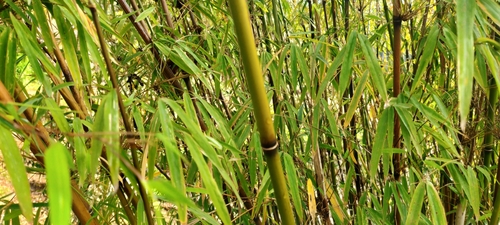
Prefers a humus rich friable sandy loam in a sunny position or in shade. Intolerant of winter wet and of temperatures below about -6°c. According to some authorities, the correct name for this species should be Himalayacalamus falconeri. This species is notably resistant to honey fungus. Plants only flower at intervals of many years. When they do come into flower most of the plants energies are directed into producing seed and consequently the plant is severely weakened. They sometimes die after flowering, but if left alone they will usually recover though they will look very poorly for a few years. If fed with artificial NPK fertilizers at this time the plants are more likely to die. Usually only about 3 metres tall in Britain, plants can reach 10 metres in height in favoured areas. The rootstock is caespitose.
Propagation
Seed - surface sow as soon as it is ripe in a greenhouse at about 20°c. Do not allow the compost to dry out. Germination usually takes place fairly quickly so long as the seed is of good quality, though it can take 3 - 6 months. Grow on in a lightly shaded place in the greenhouse until large enough to plant out. Seed is rarely available. Division in spring as new growth commences. Take divisions with at least three canes in the clump, trying to cause as little root disturbance to the main plant as possible. Grow them on in light shade in a greenhouse in pots of a high fertility sandy medium. Mist the foliage regularly until plants are established. Plant them out into their permanent positions when a good root system has developed, which can take a year or more. Basal cane cuttings. Rhizome cuttings.
Edible uses
Young shoots - cooked and used as a vegetable.
Material uses
The canes are thin walled, very light and pliable, they are used for basket making and other woven structures.
Habitat
Cool broad-leaved forests, 2000 - 2500 metres.
Native range
E. Asia - Himalayas.