Hosta rectifolia
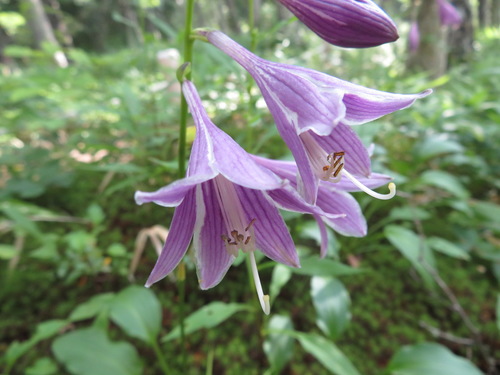
At a glance
- Lifecycle
- Perennial (hardy)
- Exposure
- Full sun
- Frost limit
- −34.4 °C
Cultivation
Thrives in most fertile soils if they are rich in humus. Plants are in general fully hardy in Britain, but young leaves in spring can be destroyed by frost. New leaves are only produced in the spring and very early summer, so any damage at this time has a deep effect on the plant. A robust plant, forming medium-size to large clumps, the rhizome is slightly stoloniferous. Members of this genus are rarely if ever troubled by browsing deer or rabbits. Plants are very attractive to slugs and snails, the young shoots in spring are especially at risk[111, K]. Hybridizes freely with other members of this genus.
Propagation
Seed - sow spring in a lightly shaded position in a greenhouse and only just cover the seed. Germination usually takes place within 1 - 3 months at 10°c. Make sure you keep the compost moist. When they are large enough to handle, prick the seedlings out into individual pots and grow them on in the greenhouse for at least their first winter. Plant them out into their permanent positions in late spring or early summer, after the last expected frosts. Division is possible at almost any time of the year so long as there is sufficient moisture.
Edible uses
Young leaves and leaf stems - cooked.
Material uses
A useful ground cover plant, succeeding in dense shade, though rather slow spreading.
Habitat
Damp lakeside moorlands.
Native range
E. Asia - N. Japan.