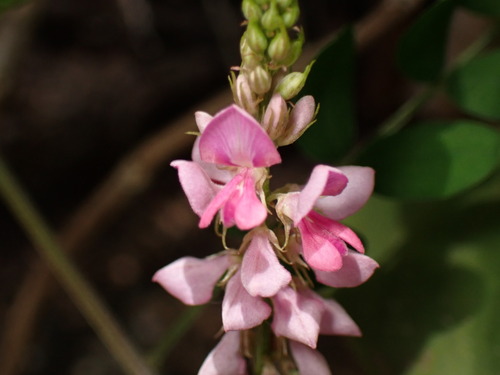
Indigofera pseudotinctoria
At a glance
- Lifecycle
- Perennial (hardy)
- Exposure
- Full sun
- Frost limit
- −23.3 °C
Cultivation
Requires a light or medium well-drained soil and a sunny position. Most members of this genus have their top-growth cut back by winter cold in this country. The roots are much hardier, however, and the plants usually resprout freely from the base in late spring, growing away quickly and flowering freely in late summer[K]. Plants in this genus are notably resistant to honey fungus. This species has a symbiotic relationship with certain soil bacteria, these bacteria form nodules on the roots and fix atmospheric nitrogen. Some of this nitrogen is utilized by the growing plant but some can also be used by other plants growing nearby.
Propagation
Pre-soak the seed for 12 hours in warm water and sow February in a warm greenhouse. The germination can be variable. Prick out the seedlings when large enough to handle and overwinter the young plants in a greenhouse for the first winter, planting out in late spring or early summer after the last expected frosts. Cuttings of half-ripe wood, 5 - 8cm with a heel if possible, July/August in individual pots in a frame. Good percentage. Root cuttings 3cm long in December. Good percentage. Suckers. Remove them in the dormant season, preferably towards the end of winter, and plant out into their permanent positions.
Edible uses
The leaves and flowers are boiled and eaten.
Habitat
Thickets, streamsides, ravines in W. Hupeh, 300 - 2000 metres.
Native range
E. Asia - China, Japan.