Lilium sargentiae
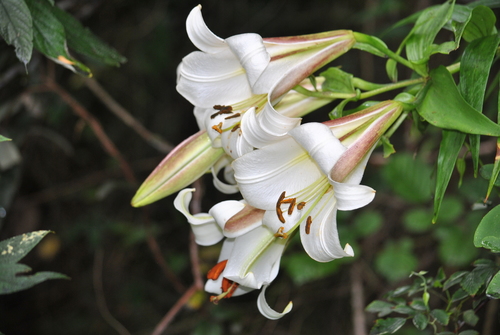
At a glance
- Exposure
- Full sun
- Frost limit
- −23.3 °C
Cultivation
Prefers an open free-draining humus-rich loamy soil with its roots in the shade and its head in the sun. The young growth in spring can be damaged by late frosts, it is therefore best to site the plant in a position that is sheltered from the morning sun[245, K]. Stem rooting, the bulbs should be planted 20 - 25cm deep. Plants are said to be very susceptible to botrytis. A very ornamental plant. The plant should be protected against rabbits and slugs in early spring. If the shoot tip is eaten out the bulb will not grow in that year and will lose vigour.
Propagation
Seed - Immediate epigeal germination. Should germinate in 2 - 4 weeks. Great care should be taken in pricking out the young seedlings, many people leave them in the seed pot until they die down at the end of their second years growth. This necessitates sowing the seed thinly and using a reasonably fertile sowing medium. The plants will also require regular feeding when in growth. Divide the young bulbs when they are dormant, putting 2 - 3 in each pot, and grow them on for at least another year before planting them out into their permanent positions when the plants are dormant[K]. Division in autumn once the leaves have died down. Replant immediately. Bulb scales can be removed from the bulbs in early autumn. If they are kept in a warm dark place in a bag of moist peat, they will produce bulblets. These bulblets can be potted up and grown on in the greenhouse until they are large enough to plant out. Bulbils - gather in late summer when they start to fall off the stems and pot up immediately. Grow on in a greenhouse until large enough to go outside.
Edible uses
Bulb - cooked. Rich in starch, it can be used as a vegetable in similar ways to potatoes (Solanum tuberosum). Flowers. No more details are given.
Habitat
Grows amongst rank grasses and scrub on granite, slate and mud shales in Szechwan.
Native range
E. Asia - China.