Lonicera angustifolia
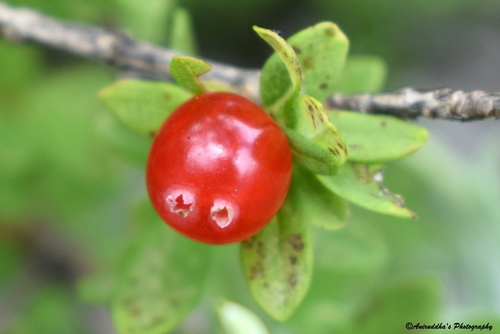
At a glance
- Lifecycle
- Perennial (hardy)
- Exposure
- Full sun
- Frost limit
- −28.9 °C
Cultivation
An easily grown plant, it grows best in a good moist soil in a sunny position, it does not fruit so well in the shade. Plants are fairly wind tolerant[K]. Plants flower and fruit better in hotter climates than Britain. Plants have been seen bearing good crops of fruit in eastern Britain, though we have only managed to produce light crops on our Cornish trial grounds[K]. The flowers have a soft 'honeysuckle' perfume. This species is closely related to L. myrtillus.
Propagation
Seed - best sown as soon as it is ripe in a cold frame. Stored seed requires 2 months cold stratification and should be sown as soon as possible in a cold frame. When they are large enough to handle, prick the seedlings out into individual pots and grow them on in the greenhouse for at least their first winter. Plant them out into their permanent positions in late spring or early summer, after the last expected frosts. Cuttings of half-ripe wood, 7 - 10cm with or without a heel, July/August in a frame. Good percentage. Cuttings of mature wood of the current season's growth, 15 - 20cm with or without a heel, November in a cold frame. Good percentage. Layering in autumn.
Edible uses
Fruit - raw. Sweet and pleasant tasting, the fruit is a bit smaller than a blackcurrant[K]. Plants often produce a second crop in late summer[K].
Material uses
Wood - hard, very close grained. Used for walking sticks.
Habitat
Forests and shrubberies, under oak, fir and deodar, to elevations of 3600 metres.
Native range
E. Asia - Himalayas.