Malus praecox
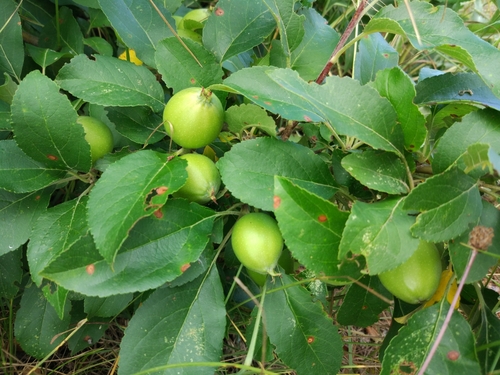
At a glance
- Lifecycle
- Perennial (hardy)
- Exposure
- Full sun
Cultivation
An easily grown plant, it succeeds in most fertile soils, preferring a moisture retentive well-drained loamy soil. This species is a parent of the cultivated apple. The fruit is a good wildlife food source, especially for birds. Hybridizes freely with other members of this genus. Plants in this genus are notably susceptible to honey fungus.
Propagation
Seed - best sown as soon as it is ripe in the autumn in a cold frame. It usually germinates in late winter. Stored seed requires stratification for 3 months at 1°c and should be sown in a cold frame as soon as it is received. It might not germinate for 12 months or more. Prick out the seedlings into individual pots as soon as they are large enough to handle. If given a rich compost they usually grow away quickly and can be large enough to plant out in late summer, though consider giving them some protection from the cold in their first winter. Otherwise, keep them in pots in a cold frame and plant them out in late spring of the following year. Cuttings of mature wood, November in a frame.
Edible uses
Fruit - raw or cooked.
Habitat
Broad-leaved and mixed forests, forest edges and amongst shrubs.
Native range
Europe - Russia.