Catmint, Catnip, Catswort, Catâs heal all, Catâs-play, Cat grass (Nepeta Cataria)
Other names Catmint, Catnip, Catswort, Catâs heal all, Catâs-play, Cat grass
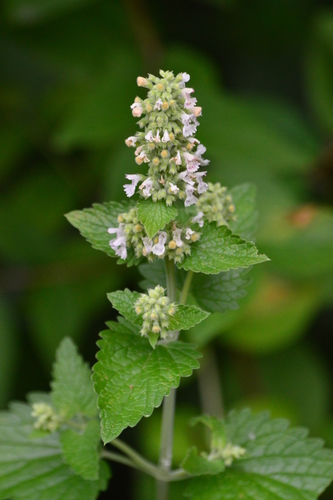
At a glance
- Lifecycle
- Perennial (hardy)
- Exposure
- Full sun
- Frost limit
- −40 °C
Cultivation
Easily grown in a light sandy soil in a sunny position. Succeeds in heavier soils if the drainage is very good. Plants are hardy to about -25°c. Catmint emits a scent that is irresistible to many cats, who will then avidly attack the plant. The smell is said to be similar to certain cat hormones and is more effective with male cats. Quite often a cat will completely destroy even a fairly large plant, small plants especially might need protection until well established[K]. Sometimes grown in the herb garden, there are some named varieties. If the plants are cut back hard when they are flowering a second crop of leaves will be produced. Members of this genus are rarely if ever troubled by browsing deer or rabbits. Catmint is a good companion plant to grow in the garden. The flowers are very attractive to bees.
Propagation
Seed - best sown as soon as it is ripe in a cold frame in the autumn. If you have sufficient freshly ripe seed then it is well worth trying a sowing outdoors in situ in the autumn. Division in spring or autumn. Very easy, large divisions can be planted out direct into their permanent positions. We have found that it is better to pot up the smaller divisions and grow them on in light shade in a cold frame until they are well established before planting them out in late spring or early summer. Basal cuttings in late spring or early summer. Harvest the shoots with plenty of underground stem when they are about 8 - 10cm above the ground. Pot them up into individual pots and keep them in light shade in a cold frame or greenhouse until they are rooting well. Plant them out in the summer.
Edible uses
Young leaves - raw. A mint-like flavour, they make an aromatic flavouring in salads[7, K]. Older leaves are used as a flavouring in cooked foods.
Medicinal uses
Catmint has a long history of use as a household herbal remedy, being employed especially in treating disorders of the digestive system and, as it stimulates sweating, it is useful in reducing fevers. The leaves and flowering tops are strongly antispasmodic, antitussive, astringent, carminative, diaphoretic, slightly emmenagogue, refrigerant, sedative, slightly stimulant, stomachic and tonic.
Material uses
The plant is said to deter insects such as ants and flea beetles. The freshly harvested flowering tops contain 0.3 - 1% essential oil by distillation. The dried leaves retain their fragrance and can be used in pot-pourri.
Habitat
Roadsides and near streams.
Native range
Europe, including Britain, from Scandanavia south and east to Spain, W. and C. Asia to the Himalayas