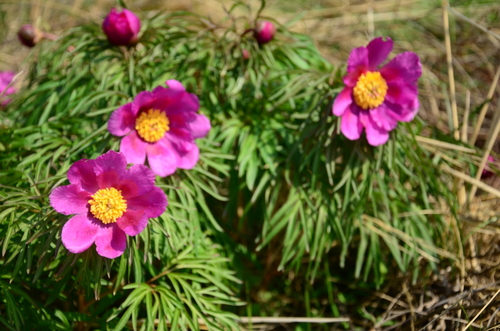
Paeonia hybrida
At a glance
- Lifecycle
- Perennial (hardy)
- Exposure
- Full sun
Cultivation
Requires a deep rich soil, preferably neutral or slightly alkaline. Very closely related to P. anomala and considered to be part of that species by some botanists. A very long-lived plant, specimens can survive in the garden for at least 50 years. Members of this genus are rarely if ever troubled by browsing deer or rabbits. A very greedy plant inhibiting the growth of nearby plants, especially legumes. Strongly resents root disturbance, taking some time to recover after being divided. Peony species are usually self-fertile, though they will also hybridise with other species if these flower nearby at the same time. Plants take 4 - 5 years to flower from seed.
Propagation
Seed - best sown as soon as it is ripe in a cold frame. If following this practice, make sure you sow the seed thinly, and give regular liquid feeds in the growing season to ensure the plants are well fed. We usually prick out the seedlings into individual pots as soon as they are large enough to handle, and then grow them on in a cold frame for at least two growing seasons before planting them out when they are in growth in the spring[K]. Division with great care in spring or autumn. Each portion must have a leaf bud. If the lifted root is stood in shade for several hours it becomes less brittle and easier to divide.
Edible uses
A gruel is made from the boiled roots.
Medicinal uses
A tea made from the dried crushed petals of various peony species has been used as a cough remedy, and as a treatment for haemorrhoids and varicose veins.
Habitat
Steppe meadows, open herb covered or stony slopes.
Native range
E. Asia - Siberia.