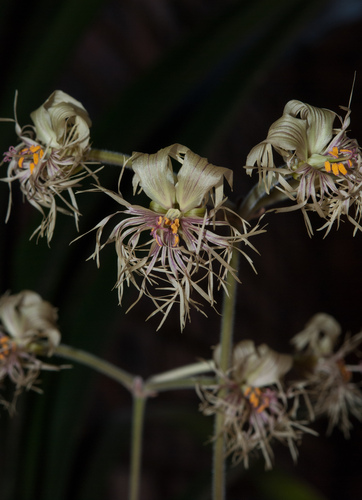
Pelargonium bowkeri
At a glance
- Lifecycle
- Perennial (hardy)
- Exposure
- Full sun
Cultivation
Requires a light well-drained neutral to alkaline soil in a sunny position. Plants are not very hardy in Britain, they generally require greenhouse protection but might succeed outdoors when grown in a very sheltered warm spot in the mildest parts of the country. Very tolerant of pruning, they can be cut right down to the base in the autumn when bringing them back indoors, or in the spring to encourage lots of fresh growth.
Propagation
Seed - best sown as soon as it is ripe in a greenhouse. Stored seed should be sown in early spring in a greenhouse. The seed germinates best with a minimum temperature of 13°c, germination usually taking place within 2 weeks though it sometimes takes some months. Prick out the seedlings into individual pots when they are large enough to handle and grow them on in the greenhouse for at least their first winter. If trying them outdoors, plant them out in early summer and consider giving them extra protection during the winter. Cuttings succeed at almost any time in the growing season but early summer is the best time in order for the new plant to become established before winter.
Edible uses
Leaves. No more details are given.
Medicinal uses
All parts of the plant are astringent.
Habitat
Not known
Native range
S. Africa.
Same genus
- Sweet scented geranium (Pelargonium graveolens)
- Rose scented geranium (Pelargonium capitatum)
- Gooseberry geranium (Pelargonium grossularioides)
- Scentless geranium (Pelargonium inodorum)
- Scarlet geranium (Pelargonium inquinans)
- Ivyleaf geranium (Pelargonium peltatum)
- Grapeleaf geranium (Pelargonium vitifolium)
- Horseshoe geranium (Pelargonium zonale)