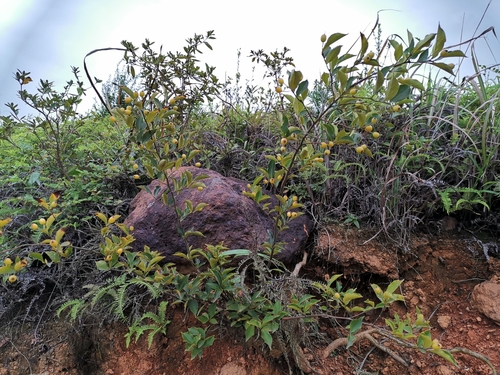
Photinia parvifolia
At a glance
- Lifecycle
- Perennial (hardy)
- Exposure
- Full sun
- Frost limit
- −23.3 °C
Cultivation
Requires a well-drained fertile soil in a sheltered position in sun or light shade. Plants are susceptible to fireblight.
Propagation
Seed - best sown in a cold frame as soon as it is ripe in the autumn. Stored seed will probably require stratification and should be sown as early in the year as possible. When they are large enough to handle, prick the seedlings out into individual pots and grow them on in the greenhouse for their first winter. Plant them out into their permanent positions in late spring or early summer, after the last expected frosts. Basal cuttings in a frame. Harvest the shoots with plenty of underground stem when they are about 8 - 10cm above the ground. Pot them up into individual pots and keep them in light shade in a cold frame or greenhouse until they are rooting well. Plant them out in the summer. Cuttings of half-ripe wood, 7 - 10cm with a heel, July/August in a frame. Cuttings of almost ripe side shoots, 7 - 12cm with a heel, October/November in a cold frame. Layering in autumn. Partially sever the layer about 12 months later and lift in the following spring. High percentage.
Edible uses
Fruit. No more details are given.
Material uses
The wood is hard and heavy, suitable for making furniture and other small articles.
Habitat
Thickets in W. Hupeh.
Native range
E. Asia - China in Hupeh.