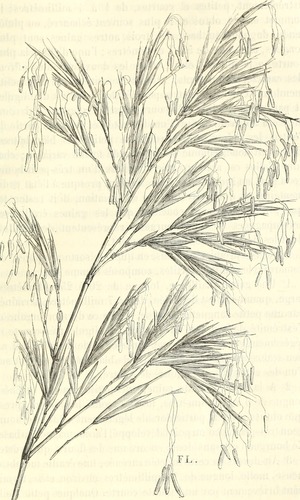
Drooping timber bamboo (Phyllostachys flexuosa)
At a glance
- Exposure
- Partial shade
- Frost limit
- −23.3 °C
Cultivation
Requires a rich damp soil in a sheltered position. A very hardy plant, tolerating temperatures down to about -17°c. According to another report the plant only suffers minor leaf damage at -22°c. This species is notably resistant to honey fungus. Plants only flower at intervals of many years. When they do come into flower most of the plants energies are directed into producing seed and consequently the plant is severely weakened. They sometimes die after flowering, but if left alone they will usually recover though they will look very poorly for a few years. If fed with artificial NPK fertilizers at this time the plants are more likely to die. A plant at Trebah gardens in Cornwall was flowering heavily in May 1995[K]. This is a good companion species to grow in a woodland because the plants are shallow rooted and do not compete with deep rooted trees. The rootstock is running. Plants need quite a lot of space because the outer culms spread out sideways and arch over.
Propagation
Seed - surface sow as soon as it is ripe in a greenhouse at about 20°c. Do not allow the compost to dry out. Germination usually takes place fairly quickly so long as the seed is of good quality, though it can take 3 - 6 months. Grow on in a lightly shaded place in the greenhouse until large enough to plant out. Seed is rarely available. Division in spring as new growth commences. Divisions from the open ground do not transplant well, so will need careful treatment and nurturing under cover in pots until at least late spring. Basal cane cuttings in spring.
Edible uses
Young shoots - cooked. The canes are about 10mm in diameter[K]. The shoots are harvested in the spring when they are about 8cm above the ground, cutting them about 5cm below soil level.
Material uses
The canes are not of the highest quality but can be used for plant supports etc. The medium quality wood is good for all standard bamboo uses for canes of this size.
Habitat
Not known
Native range
E. Asia - China.