Pleioblastus gramineus
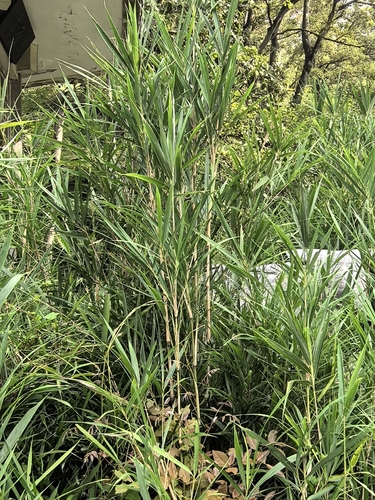
At a glance
- Exposure
- Partial shade
- Frost limit
- −17.8 °C
Cultivation
Succeeds in most soils but prefers a good loamy soil. Closely related to P. hindsii. The rootstock is running and invasive. This species is notably resistant to honey fungus. Plants only flower at intervals of several years, they often produce fertile seed.
Propagation
Seed - if possible, surface sow the seed as soon as it is ripe in a greenhouse at about 20°c. Stored seed should be sown as soon as it is received. Do not allow the compost to dry out. Germination usually takes place fairly quickly so long as the seed is of good quality, though it can take 3 - 6 months. Prick out the seedlings into individual pots when they are large enough to handle and grow them on in a lightly shaded place in the greenhouse or cold frame until they are large enough to plant out, which could be a number of years. The plants only flower at intervals of several years and so seed is rarely available. Division as the plant comes into growth in spring. Take divisions with at least three canes in the clump, trying to cause as little root disturbance to the main plant as possible. Grow them on in light shade in a greenhouse in pots of a high fertility sandy medium. Mist the foliage regularly until plants are established. Plant them out into their permanent positions when a good root system has developed, which can take a year or more.
Edible uses
Young shoots - cooked.
Material uses
Canes are thin-walled but strong and can be used as plant supports.
Habitat
Not known
Native range
E. Asia - E. China, Japan.