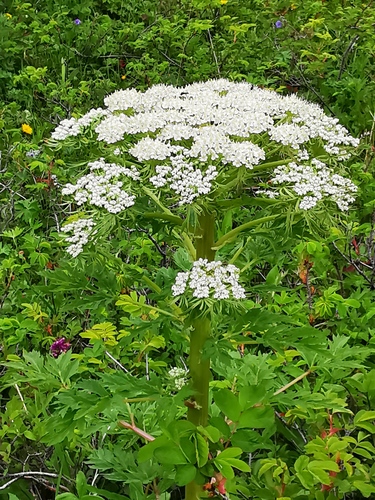
Pleurospermum uralense
At a glance
- Lifecycle
- Biennial
- Exposure
- Full sun
Cultivation
We have very little information on this species and do not know if it will be hardy in Britain, though judging by its native range it should succeed outdoors in many parts of this country. Some botanists consider this species to be no more than a part of P. camtschaticum. The following notes are based on the general needs of the genus. Succeeds in any moderately fertile soil in full sun. Plants are often monocarpic, living for a number of years without flowering and then dying after flowering.
Propagation
Seed - we have no information on this species but suggest sowing the seed in spring in a cold frame. When they are large enough to handle, prick the seedlings out into individual pots and grow them on in the greenhouse for at least their first winter. Plant them out into their permanent positions in late spring or early summer, after the last expected frosts.
Edible uses
Young leaves - cooked.
Habitat
Coniferous forests, forest edges, pine forest, birch-aspen forests and felled forests, rarely in sub-alpine meadows, ravines and near swamps.
Native range
N. Europe to E. Asia.