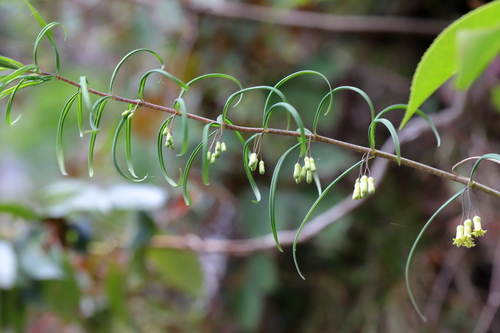
Polygonatum cirrhifolium
At a glance
- Lifecycle
- Perennial (hardy)
- Exposure
- Full shade
Cultivation
We do not have much information on this species and do not know if it will be hardy in Britain, though judging by its native range it should succeed outdoors in most parts of this country. It is closely related to P. verticillatum. The following notes are based on the general needs of the genus. Prefers a fertile humus rich moisture-retentive well-drained soil in cool shade or semi-shade. Members of this genus are rarely if ever troubled by browsing deer or rabbits. The young shoots are very attractive to slugs[K]. Hybridizes with other members of this genus.
Propagation
Seed - best sown as soon as it is ripe in early autumn in a shady part of a cold greenhouse and it takes a few years for them to reach a good size. When they are large enough to handle, prick the seedlings out into individual pots and grow them on in a shady position in the greenhouse for at least their first winter. Plant them out into their permanent positions in late spring or early summer, after the last expected frosts. Division in March or October. Larger divisions can be planted out direct into their permanent positions. We have found that it is better to pot up the smaller divisions and grow them on in light shade in a cold frame until they are well established before planting them out in late spring or early summer.
Edible uses
Tender leaves and young shoots - cooked as a vegetable. They can be used as an asparagus substitute.
Medicinal uses
The roots are cardiotonic, sialagogue, stimulant and tonic. The roots are used in Tibetan medicine where they are said to have a sweet taste and a neutral potency.
Habitat
Forests, shrubberies and open slopes, 1500 - 3700 metres westwards from Himachel Pradesh.
Native range
E. Asia - China to the Himalayas.