Himalayan Giant Blackberry (Rubus procerus)
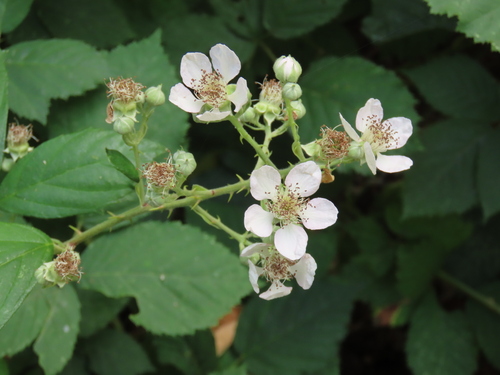
At a glance
- Lifecycle
- Perennial (hardy)
- Exposure
- Full sun
- Frost limit
- −28.9 °C
Cultivation
Easily grown in a good well-drained loamy soil in sun or semi-shade. A form of this species, known as 'Himalayan giant', is commonly cultivated in temperate zones for its edible fruit. This name may be wrongly applied . According to the new RHS Dictionary of Gardening, the correct name for the 'Himalayan Giant' blackberry is R. procerus. P.J.Muell., the name R. discolor is misapplied. Plants in this genus are notably susceptible to honey fungus.
Propagation
Seed - requires stratification and is best sown in early autumn in a cold frame. Stored seed requires one month stratification at about 3°c and is best sown as early as possible in the year. Prick out the seedlings when they are large enough to handle and grow on in a cold frame. Plant them out into their permanent positions in late spring of the following year. Cuttings of half-ripe wood, July/August in a frame. Tip layering in July. Plant out in autumn. Division in early spring or just before leaf-fall in the autumn.
Edible uses
Fruit - raw or cooked in pies, cakes etc with a very pleasant rich flavour when fully ripe[K].
Material uses
A purple to dull blue dye is obtained from the fruit.
Habitat
Not known
Native range
C. Europe.