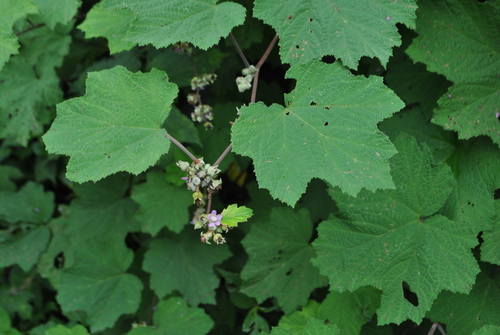
Rubus setchuenensis
At a glance
- Lifecycle
- Perennial (hardy)
- Exposure
- Full sun
- Frost limit
- −28.9 °C
Cultivation
Easily grown in a good well-drained loamy soil in sun or semi-shade. The stems are thornless. Plants in this genus are notably susceptible to honey fungus.
Propagation
Seed - requires stratification and is best sown in early autumn in a cold frame. Stored seed requires one month stratification at about 3°c and is best sown as early as possible in the year. Prick out the seedlings when they are large enough to handle and grow on in a cold frame. Plant them out into their permanent positions in late spring of the following year. Cuttings of half-ripe wood, July/August in a frame. Tip layering in July. Plant out in autumn. Division in early spring or just before leaf-fall in the autumn.
Edible uses
Fruit - raw or cooked.
Material uses
A purple to dull blue dye is obtained from the fruit.
Habitat
Slopes, roadsides, forest margins and thickets, often forming dense, impenetrable thickets on deforested slopes, at elevations of 500 - 3000 metres.
Native range
E. Asia - W. China.