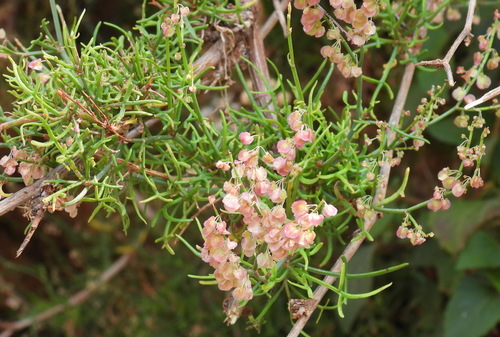
Rumex hastatus
At a glance
- Lifecycle
- Perennial (hardy)
- Exposure
- Full sun
Cultivation
We have very little information on this species and do not know if it will be hardy in Britain, though judging by its native range it should succeed outdoors in many parts of this country. It is likely to succeed in dry soils. The following notes are based on the general needs of the genus. Succeeds in most soils but prefers a deep fertile moderately heavy soil that is humus-rich, moisture-retentive but well-drained and a position in full-sun or part shade.
Propagation
Seed - sow spring in a cold frame. When they are large enough to handle, prick the seedlings out into individual pots and plant them out in the summer. Division in spring.
Edible uses
Tender young leaves and shoots - raw or cooked.
Medicinal uses
The juice of the plant is astringent and is used in the treatment of bloody dysentery.
Material uses
The root contains 25 - 30% tannin. Although no specific mention has been made for this species, dark green to brown and dark grey dyes can be obtained from the roots of many species in this genus, They do not need a mordant.
Habitat
Wasteland, dry slopes and rocks to elevations of 2400 metres.
Native range
E. Asia - Himalayas.