Pacific Willow (Salix lasiandra)
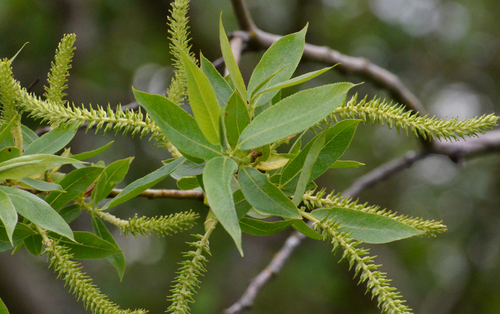
At a glance
- Lifecycle
- Perennial (hardy)
- Exposure
- Full sun
- Frost limit
- −28.9 °C
Cultivation
Succeeds in most soils, including wet, ill-drained or intermittently flooded soils. A fast-growing but short-lived tree. Closely related to S. pentandra. The root system is rather aggressive and can cause problems with drains. Hybridizes freely with other members of this genus. Plants in this genus are notably susceptible to honey fungus. Dioecious. Male and female plants must be grown if seed is required.
Propagation
Seed - must be surface sown as soon as it is ripe in late spring. It has a very short viability, perhaps as little as a few days. Cuttings of mature wood of the current year's growth, November to February in a sheltered outdoor bed or planted straight into their permanent position and given a good weed-suppressing mulch. Very easy. Plant into their permanent positions in the autumn. Cuttings of half-ripe wood, June to August in a frame. Very easy.
Edible uses
Inner bark - raw or cooked. It can be dried, ground into a powder and then added to cereal flour for use in making bread etc. A very bitter flavour, it is a famine food that is only used when all else fails. Young shoots - raw or cooked. They are not very palatable.
Medicinal uses
The inner bark is haemostatic. A decoction of the branch tips has been used for soaking the feet and legs in the treatment of cramps. A decoction of the leaves has been used to treat colds and sore throats. A cold infusion of the charred, pulverized stems has been used in the treatment of diarrhoea. The fresh bark of all members of this genus contains salicin.
Material uses
The stems are very flexible and can be used in basket making. The plant is usually coppiced annually when grown for basket making, though it is possible to coppice it every two years if thick poles are required as uprights. The inner bark can be twisted and made into two-ply strings. The bark has been used as a thread in basket making. The wood was formerly used to make charcoal, but is not utilised at the present time.
Habitat
Streamsides from sea-level to moderate elevations.
Native range
Western N. America - Alaska to California.