Vegetable Tallow (Sapium sebiferum)
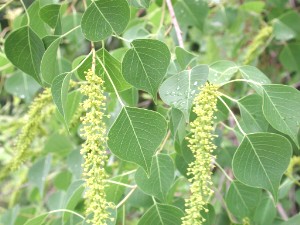
At a glance
- Lifecycle
- Perennial (hardy)
- Exposure
- Full sun
- Frost limit
- −6.7 °C
Cultivation
Succeeds in a sunny position in any well-drained soil. This tree is not reliably hardy in Britain, though it was successfully grown here in the 18th century. A fast-growing tree. Plants require from 3 - 8 years to bear, but then continue to bear for an average of 70 - 100 years. They attain their full size in 10 - 12 years. The plant has escaped from cultivation in N. America and has become a serious pest there, displacing native vegetation. It apparently produces root secretions that modify soil chemistry and discourage the establishment of native species. Responds well to coppicing.
Propagation
Seed - do not cold stratify the seed since this can lead to secondary dormancy. Sown in April in a warm greenhouse, it usually germinates within 4 weeks. Prick out the seedlings into individual pots when they are large enough to handle. Overwinter in a greenhouse for at least their first 2 winters and plant out in late spring. Cuttings of half-ripe wood, July/August in a frame.
Edible uses
The wax from the seed is used as a lard substitute or in cacao butter.
Medicinal uses
The leaves and the roots are depurative, diuretic and laxative. The seed is antidote, emetic, hydragogue and purgative. The root bark is diuretic. The juice of the tree (the sap is probably meant here[K]) is acrid and vesicant.
Material uses
The seed is coated with a wax. This wax, which comprises about 24% of the seed. The seed contains about 20% of a drying oil. The residual cake, after the oil is expressed, is used as manure, particularly for tobacco fields. The leaves are rich in tannin. The wood is white, even and close grained, light, soft or moderately hard. The wood is light and soft. It is used for fuel.
Habitat
Found wild in the foothills around Dehra Dun.
Native range
E. Asia - China, Japan, Himalayas.