Greasewood (Sarcobatus vermiculatus)
Other names black greasewood, saltbush, seepwood
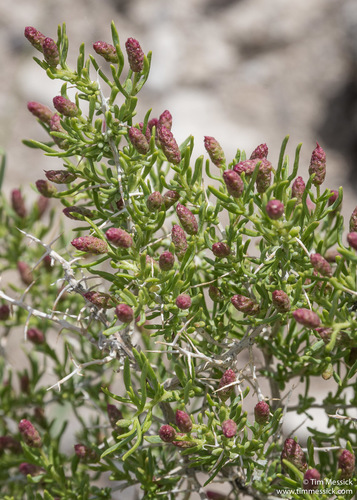
At a glance
- Lifecycle
- Perennial (hardy)
- Exposure
- Full sun
- Frost limit
- −28.9 °C
Cultivation
An easily grown plant. Plants can be dioecious or monoecious. Male and female plants must be grown if seed is required.
Propagation
Seed - we have no information for this species but suggest sowing the seed in early spring in a cold frame. When they are large enough to handle, prick the seedlings out into individual pots and plant them out in the summer. Cuttings of half-ripe wood are worth trying in July/August.
Edible uses
Young shoots - cooked. The seeds are occasionally consumed.
Medicinal uses
The crushed leaves have been used to treat insect bites. An infusion of the burnt plant has been used in the treatment of diarrhoea and bleeding from the rectum. The wood or the roots can be heated until they are burnt or blackened and then used on aching and decayed teeth.
Material uses
The wood is used for fuel, for want of better materials in the areas where it grows wild. The wood is strong.
Habitat
Dry alkaline and saline soils.
Native range
South-western N. America - Nebraska and Wyoming to Nevada and New Mexico.