Sedum japonicum
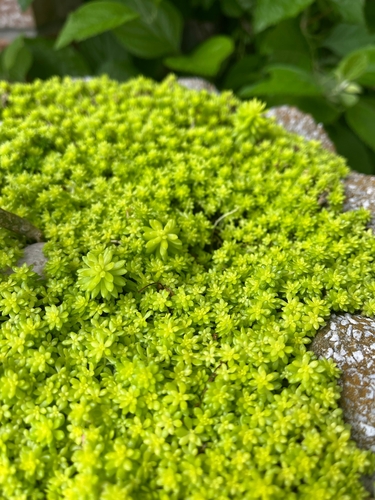
At a glance
- Lifecycle
- Perennial (hardy)
- Exposure
- Full sun
Cultivation
Succeeds in most soils. Hardy to about -15°c. A polymorphic species. All members of this genus are said to have edible leaves, though those species, such as this one, that have yellow flowers can cause stomach upsets if they are eaten in quantity. Plants in this genus seem to be immune to the predations of rabbits.
Propagation
Seed - surface sow in spring in well-drained soil in a sunny position in a greenhouse. Do not allow the soil to dry out. Prick out the seedlings into individual pots when they are large enough to handle. If sufficient growth is made, it is possible to plant them out during the summer, otherwise keep them in a cold-frame or greenhouse for their first winter and plant them out in early summer of the following year[K]. Division is very easy and can be carried out at almost any time in the growing season, though is probably best done in spring or early summer. Larger divisions can be planted out direct into their permanent positions. We have found it best to pot up the smaller divisions and grow them on in a lightly shaded position in a cold frame, planting them out once they are well established in the summer.
Edible uses
Leaves and stems - raw or cooked.
Habitat
Rocks in thin woods and on sunny slopes in the foothills of C. and S. Japan.
Native range
E. Asia - W. China, Japan.