Oondoroo (Solanum simile)
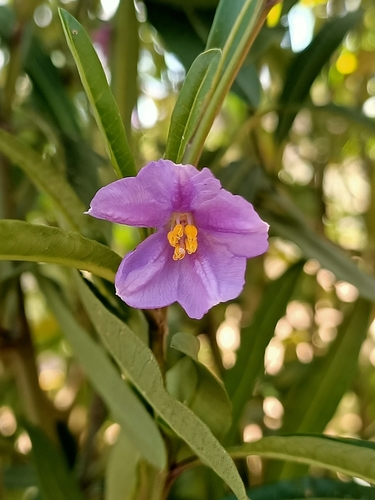
At a glance
- Lifecycle
- Perennial (hardy)
- Exposure
- Full sun
Cultivation
We have very little information on this species and do not know if it will succeed in Britain, though judging by its native range it is unlikely to succeed outdoors except in the very mildest parts of the country. Plants tolerate temperatures down to at least -7°c in Australian gardens. The following notes are based on the general needs of the genus. Succeeds in most soils in a sunny position..
Propagation
Seed - sow spring in a warm greenhouse. Germinates in 2 - 3 weeks at 20°c. Prick out the seedlings into individual pots when they are large enough to handle. If growing the plants as annuals, plant them out after the last expected frosts and give them some protection such as a cloche until they are growing well. If growing as a perennial, especially in areas at the limits of its cold-hardiness, it will probably be better to grow the plants on in the greenhouse for their first winter. Give them fairly large pots (12cm or larger) because they have very strong root growth. Top growth might die back over winter, but the roots should survive if temperatures in the greenhouse do not fall below about -5°c. Plant them out in early summer of the following year. The plants will be somewhat hardier in their second winter. Cuttings of half-ripe wood, July/August in a frame. Very easy, the cuttings root within a couple of weeks. Pot them up in fairly large pots and overwinter them in the greenhouse before planting out in early summer.
Edible uses
Fruit. No further details are given but some caution is advised and the unripe fruit should not be eaten at all[K].
Medicinal uses
A source of solasonine - used in the manufacture of steroidal drugs and contraceptives. The unripe fruit is the richest source.
Material uses
Plants can be grown as a screening hedge in climates suitable for them.
Habitat
Arid environments, including coastal sands.
Native range
Australia - New South Wales, Queensland, South Australia, Victoria, Western Australia.