Branched Burr-Reed (Sparganium androcladum)
Other names branched bur-reed, branched burreed, branching burreed
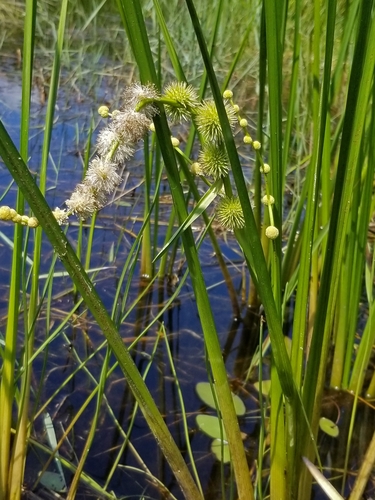
At a glance
- Lifecycle
- Perennial (hardy)
- Exposure
- Full sun
Cultivation
We have very little information on this species and do not know if it will be hardy in Britain, though judging by its native range it should succeed outdoors in many parts of the country. The following notes are based on the general needs of the genus. A plant of wet ground, it should be grown in a bog garden or in shallow water up to 30cm deep.
Propagation
Seed - best sown as soon as it is ripe in a pot in the greenhouse. Stand the pots in 2 - 3cm of water. Prick out the seedlings into individual pots when they are large enough to handle and gradually increase the depth of water as the plants grow until it is about level with the tops of the pots. Plant them out in the summer if they have grown sufficiently, otherwise plant them out in the following spring. Division in spring or autumn. Larger divisions can be planted out direct into their permanent positions. We have found it best to pot up the smaller divisions and grow them on in a lightly shaded position in a cold frame, planting them out once they are well established in the summer.
Edible uses
Root - cooked. Stem base - cooked.
Habitat
Muddy or peaty shores, swamps and shallow water.
Native range
Eastern N. America - Newfoundland to Minnesota, Florida and Louisiana.