Japanese bladdernut (Staphylea bumalda)
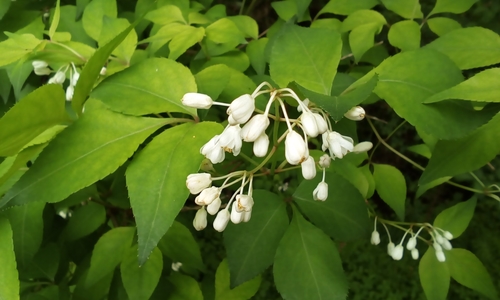
At a glance
- Lifecycle
- Perennial (hardy)
- Exposure
- Full sun
- Frost limit
- −34.4 °C
Cultivation
Tolerant of a wide range of soils so long as they are not too dry. The Japanese form of this species is rather tender in Britain. The plants flower best in years that follow hot summers. Plants in this genus are notably resistant to honey fungus.
Propagation
Seed - this can be very slow to germinate, sometimes taking 18 months or more. It is best sown as soon as it is ripe in a cold frame, and some of it at least should then germinate in the spring. Stored seed should be sown as early in the year as possible and given cold stratification - it might not germinate until spring of the following year. Prick out the seedlings into individual pots when they are large enough to handle and grow them on in light shade in the greenhouse for their first winter. Plant them out early the following summer. Cuttings of half-ripe wood, 5 - 8cm with a heel, July/August in a frame. Fair to good percentage. Layering in July/August. Takes 15 months. Good percentage.
Edible uses
Young leaves - cooked.
Habitat
Woods and by streams in lowland and hilly areas to 1300 metres, all over Japan.
Native range
E. Asia - China, Japan, Korea.