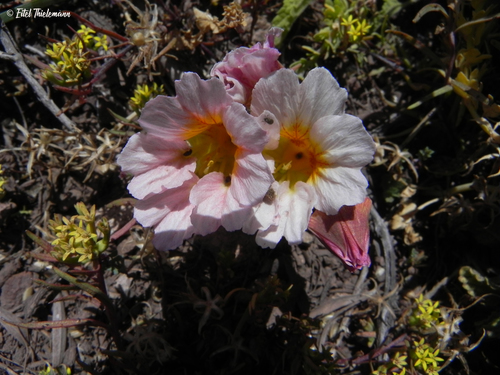
Tropaeolum sessilifolium
At a glance
- Lifecycle
- Perennial (hardy)
- Exposure
- Full sun
- Frost limit
- −6.7 °C
Cultivation
Prefers a sunny position in a well-drained humus-rich neutral or slightly acidic loam. This species is not hardy in the colder areas of the country, it tolerates temperatures down to about -5°c and is usually best grown in a cold greenhouse or conservatory. The plant sets seed when grown outdoors, but a better set is obtained when the plants are grown under protection. A climbing plant, it supports itself by twisting its leaf stalks around other plants etc. The caterpillars of the cabbage white butterfly can be a nuisance and often cause considerable damage to the leaves.
Propagation
Seed - sow early spring in a greenhouse. Prick the seedlings out into individual pots once they are large enough to handle and grow them on in the greenhouse for their first winter. Plant out in late spring or early summer, after the last expected frosts. The seed normally germinates quite freely. Division of the tubers in the autumn or spring. In cold winter areas the tubers can be harvested in the autumn after top-growth has died down and they can then be stored in a cool frost-free position until planting them out in the spring. Cuttings of basal stems in the spring. Pot them up into individual pots and place them in light shade in a frame until they are established. Plant out in early summer.
Edible uses
Tuber - raw or cooked.
Habitat
Rather arid mountain slopes.
Native range
S. America - Chile.