Vaccinium duclouxii
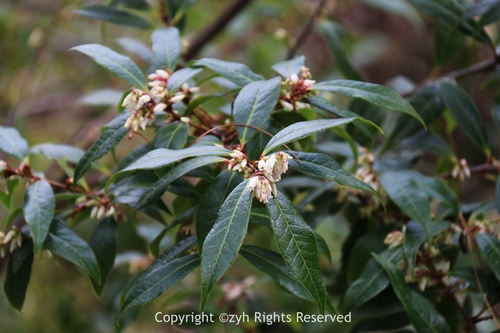
At a glance
- Lifecycle
- Perennial (hardy)
- Exposure
- Full sun
- Frost limit
- −6.7 °C
Cultivation
Requires a moist but freely-draining lime free soil, preferring one that is rich in peat or a light loamy soil with added leaf-mould. Dislikes root disturbance, plants are best grown in pots until being planted out in their permanent positions. Only succeeds outdoors in the mildest areas of the country. This species is closely related to V. donnianum. Plants in this genus are notably resistant to honey fungus.
Propagation
Seed - sow late winter in a greenhouse in a lime-free potting mix and only just cover the seed. Once they are about 5cm tall, prick the seedlings out into individual pots and grow them on in a lightly shaded position in the greenhouse for at least their first winter. Plant them out into their permanent positions in late spring or early summer, after the last expected frosts. Cuttings of half-ripe wood, 5 - 8cm with a heel, August in a frame. Slow and difficult. Layering in late summer or early autumn. Division of suckers in spring or early autumn.
Edible uses
Fruit - raw or cooked. Positively nice to eat.
Habitat
Thickets, evergreen forests and pine-oak forests at elevations of 1500 - 2600, occasionally to 3100 metres.
Native range
E. Asia - W. China in Yunnan.