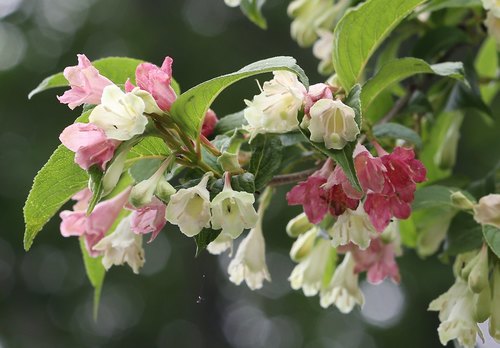
Weigela decora
At a glance
- Lifecycle
- Perennial (hardy)
- Exposure
- Full sun
- Frost limit
- −23.3 °C
Cultivation
An easily grown plant, succeeding in most fertile soils. Plants are very floriferous and can exhaust themselves, literally flowering themselves to death. The flowers are borne in the leaf nodes of the previous years growth and any pruning is therefore best done as soon as the plant has finished flowering. Plants in this genus are notably resistant to honey fungus.
Propagation
Seed - we have no information for this species but suggest sowing the seed in a cold frame as soon as it is ripe if this is possible, otherwise in late winter or early spring. Prick out the seedlings into individual pots when they are large enough to handle and grow them on in a cold frame for their first winter. Plant them out in late spring or early summer. Softwood basal cuttings, 10 - 12cm long, in a sandy soil in a cold frame in early summer. Cuttings of half-ripe wood, 8 - 10 cm with a heel, July/August in a frame. Cuttings of mature wood of the current seasons growth. 20 cm long, November in a sheltered outdoor nursery bed.
Edible uses
Young leaves - cooked.
Habitat
In sunny places at elevations of 100 - 2300 metres.
Native range
E. Asia - C. and S. Japan.