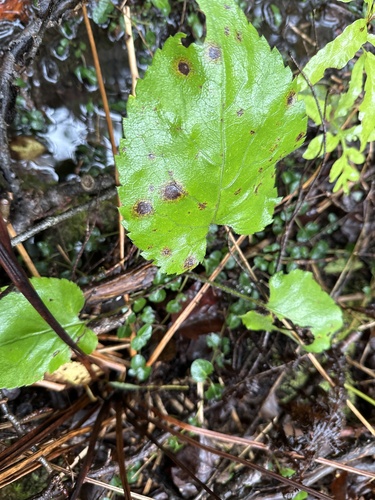
Bigleaf Aster (Aster macrophyllus)
At a glance
- Lifecycle
- Perennial (hardy)
- Exposure
- Full sun
- Frost limit
- −40 °C
Cultivation
Succeeds in most good garden soils. Plants are hardy to about -25°c. The plant has an invasive root system and can spread freely when well sited. Slugs are fond of this plant and have destroyed even quite large clumps by eating out all the new growth in spring[K]. Most species in this genus seem to be immune to the predations of rabbits. A very variable plant with many different forms.
Propagation
Seed - surface sow in spring in a cold frame. Do not allow the compost to become dry. Pre-chilling the seed for two weeks can improve germination rates. When large enough to handle, prick the seedlings out into individual pots and plant them out in the summer. Division in spring or autumn. Very easy, larger divisions can be planted straight into their permanent positions whist smaller clumps are best potted up and kept in a cold frame until they are growing away well. Basal cuttings in late spring. Harvest the shoots when they are about 10 - 15cm long with plenty of underground stem. Pot them up into individual pots and keep them in light shade in a cold frame or greenhouse until they are rooting well. Plant them out in the summer.
Edible uses
Very young leaves - cooked and used as a vegetable. Roots - cooked. They have been used in soups.
Medicinal uses
The roots have been used as a blood medicine. A compound decoction of the roots has been used as a laxative in the treatment of venereal disease.
Material uses
Plants can be used as a ground cover in light shade, forming a spreading clump.
Habitat
Dry to moist open woods, thickets and clearings.
Native range
Eastern N. America. Occasionally naturalized in Britain.