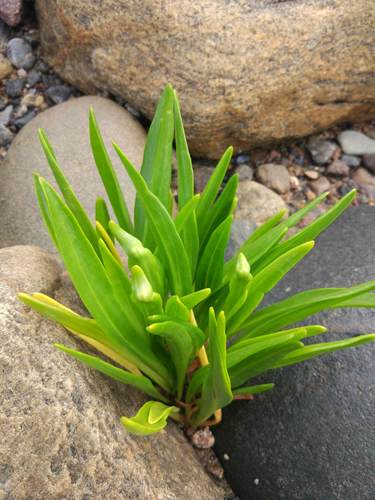
Sea aster (Aster tripolium)
At a glance
- Lifecycle
- Perennial (hardy)
- Exposure
- Full sun
- Frost limit
- −23.3 °C
Cultivation
Succeeds in most good garden soils. This species tends to be a short-lived perennial. Most species in this genus seem to be immune to the predations of rabbits. Hybridizes freely with other members of this genus.
Propagation
Seed - surface sow in spring in a cold frame. Do not allow the compost to become dry. Pre-chilling the seed for two weeks can improve germination rates. When large enough to handle, prick the seedlings out into individual pots and plant them out in the summer.
Edible uses
Leaves and stems - the somewhat fleshy leaves are used to make pickles or are cooked.
Medicinal uses
Ophthalmic.
Habitat
Salt marshes and maritime cliffs.
Native range
Coastal areas of Europe, including Britain, N. Africa and saline inland areas of Europe and C. Asia.