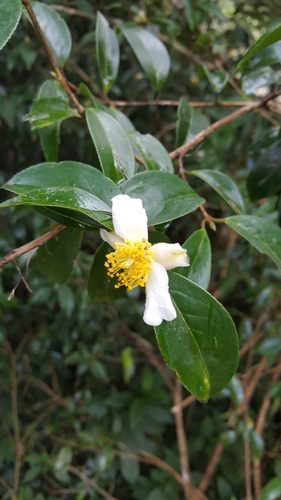
Nepal Camellia (Camellia kissi)
At a glance
- Lifecycle
- Perennial (hardy)
- Exposure
- Full sun
- Frost limit
- −12.2 °C
Cultivation
Prefers a woodland soil but thrives in a warm open well-drained loam if leafmould is added. Prefers a wet summer and a cool but not very frosty dry winter. Plants are not very self-compatible, self-fertilized flowers produce few seeds and these are of low viability. This species is sometimes cultivated in China for the edible oil contained in its seed.
Propagation
Seed - can be sown as soon as it is ripe in a greenhouse. Prick out the seedlings into individual pots when they are large enough to handle and grow them on in light shade in the greenhouse for at least their first winter. Plant them out into their permanent positions when they are more than 15cm tall and give them some protection from winter cold for their first year or three outdoors[K]. Cuttings of almost ripe wood, 10 - 15cm with a heel, August/September in a shaded frame. High percentage but slow. Cuttings of firm wood, 7 - 10cm with a heel, end of June in a frame. Leaf-bud cuttings, July/August in a frame.
Edible uses
An oil is obtained from the seed. A tea is made from the steamed then dried leaves. The flowers are boiled then pickled. The fruit is said to be edible. This seems a very strange report, the fruit is a dry wooden capsule[K].
Medicinal uses
The oil is much valued in medicine. No more details given.
Habitat
Forests and shrubberies in evergreen forests, 1000 - 2100 metres.
Native range
E. Asia - C. Nepal to S.W. China.