Foetid Bugbane (Cimicifuga foetida)
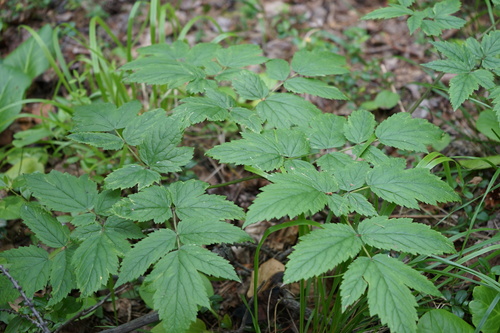
At a glance
- Lifecycle
- Perennial (hardy)
- Exposure
- Partial shade
- Frost limit
- −40 °C
Cultivation
Prefers a moist humus rich soil and some shade. A greedy plant, inhibiting the growth of nearby plants, especially legumes. There is some confusion over the name of this species, C. foetida (Auct.) is given as a synonym for C. europaea Schipez (said to be native to E. Europe) whilst another authority cites C. europaea as a synonym of C. foetida. It is possible that entries under this species apply also (or instead) to C. europaea. A very attractive plant, but the flowers and the green seed pods have an unusual, slightly unpleasant smell.
Propagation
Seed - best sown as soon as it is ripe in a cold frame. Prick out the young seedlings into individual pots when they are large enough to handle and grow them on in a frame for their first winter. Plant out in late spring or early summer[K]. Division in spring or autumn. Larger clumps can be replanted direct into their permanent positions, though it is best to pot up smaller clumps and grow them on in a cold frame until they are rooting well. Plant them out in the summer or following spring.
Edible uses
Leaves - cooked. Some caution is advised, see the notes above on toxicity.
Medicinal uses
Foetid bugbane is an anti-infective herb that lowers fevers and reduces pain, see the notes above on toxicity.
Material uses
Both the growing and the dried plant is used as an insect repellent in Siberia.
Habitat
Shrubberies and forest clearings on open humus-rich soils, to 4000 metres in the Himalayas.
Native range
E. Asia - C. Russia to Japan.