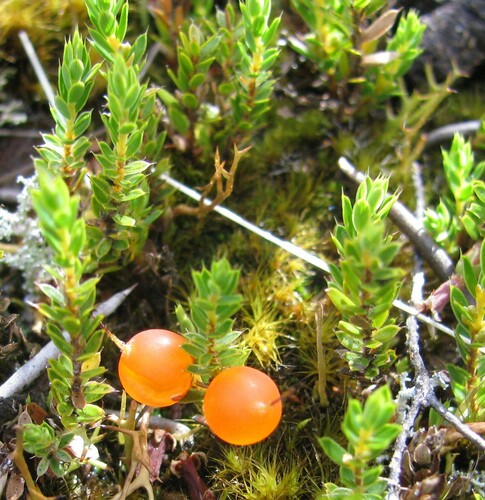
Cyathodes fraseri
At a glance
- Lifecycle
- Perennial (hardy)
- Exposure
- Full shade
- Frost limit
- −12.2 °C
Cultivation
Requires a moist well-drained lime-free humus rich soil in a sheltered site in partial or dappled shade. This plant is not very hardy in Britain though it succeeds outdoors in the milder areas of the country. Plants have very fine root systems and great care must be taken when transplanting them.
Propagation
Seed - surface sow in an ericaceous soil mix, February/March in a cold frame. Grow them on in the greenhouse for at least their first 2 growing seasons and, when large enough, plant them out into their permanent positions in late spring or early summer. Cuttings of half-ripe wood, July/August in a frame. Neither easy nor reliable. Air layering. Division of the plants as they come into growth in the spring. We have found it best not to dig up the main clump, but to tease out small divisions from the sides of the plant. Make sure that these are well rooted and pot them up in light shade in a greenhouse. Grow them on for their first summer in the greenhouse and plant them out in late spring, after the last expected frosts.
Edible uses
Fruit - raw or cooked. (does this refer to the seed?[K]).
Material uses
A most attractive ground cover plant for the winter garden.
Habitat
Coastal dunes, lowland to sub-alpine open grassland and rocky places on North, South and Stewart Islands in New Zealand.
Native range
Australia and New Zealand.