Chrysanthemum (Dendranthema indicum)
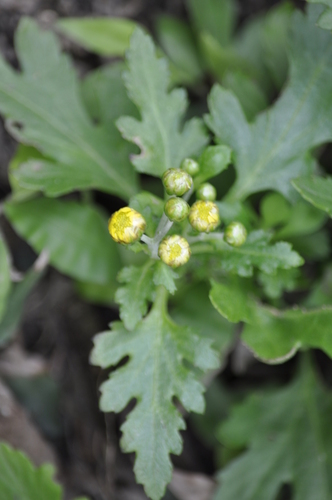
At a glance
- Lifecycle
- Perennial (hardy)
- Exposure
- Full sun
- Frost limit
- −23.3 °C
Cultivation
Succeeds in most well-drained fertile soils in a sunny position. Plants tolerate temperatures down to about -10°c and should succeed outdoors in most parts of Britain. This species is closely related to D. x grandiflorum (the cultivated chrysanthemum) according to one report. It has been proposed (1999) to restore this species to Chrysanthemum as C. indicum L. since the plant is so widely known under this name. When bruised, the foliage has a pungent refreshing fragrance that is somewhat lemon-like and reminiscent of chamomile.
Propagation
Seed - sow spring to early summer in a greenhouse and only just cover the seed. When they are large enough to handle, prick the seedlings out into individual pots and plant them out in the summer. Division in spring. Larger clumps can be replanted direct into their permanent positions, though it is best to pot up smaller clumps and grow them on in a cold frame until they are rooting well. Plant them out in the spring.
Edible uses
The flower heads are pickled in vinegar. Young leaves - cooked. An aromatic tea is made from the leaves. Seed. No more details are given but it is very small and would be rather fiddly to use.
Medicinal uses
The whole plant is antiphlogistic, blood tonic, depurative, febrifuge and vulnerary. The plant is used in China to treat eye ailments. The leaves are depurative. The flowers are aperient, bitter, hypotensive, stomachic and vasodilator. An essential oil obtained from the plant contains chrysanthenone, this is active on the brain centre affected by Parkinson's disease.
Material uses
The seed contains about 16% of a semi-drying oil, but no information is given as to its uses. The seed is rather small, commercial extraction is probably not viable[K].
Habitat
Found wild in most habitats.
Native range
E. Asia - Eastern China, Central and Southern Japan.