Chrysanthemum (Dendranthema x grandiflorum)
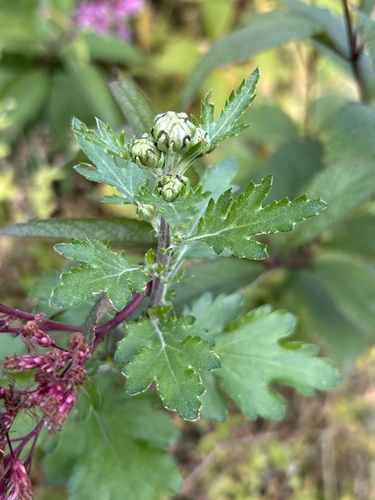
At a glance
- Lifecycle
- Perennial (hardy)
- Exposure
- Full sun
- Frost limit
- −34.4 °C
Cultivation
Succeeds in most well-drained fertile soils in a sunny position. This species is not fully hardy in Britain, many of its cultivars requiring greenhouse protection in the colder areas of the country. The chrysanthemum is widely cultivated as an ornamental flowering plant. It has been proposed (1999) to restore this species to Chrysanthemum as C. x morifolium Ramat. since the plant is so widely known under this name.
Propagation
Seed - sow spring to early summer in a greenhouse and only just cover the seed. It usually germinates in 10 - 18 days at 15°c but if it does not germinate within 4 weeks then try chilling the seed for 3 weeks in the salad compartment of a fridge. When they are large enough to handle, prick the seedlings out into individual pots and plant them out in the summer. This is a hybrid species and so will not breed true from seed. Division in spring. Larger clumps can be replanted direct into their permanent positions, though it is best to pot up smaller clumps and grow them on in a cold frame until they are rooting well. Plant them out in the spring.
Edible uses
The flower heads or petals. Leaves - cooked. An aromatic tea is made from the leaves. A tangy aromatic tea is made from the flowers or flower petals.
Medicinal uses
Chrysanthemum flowers, known in China as Ju Hua, are a bitter aromatic herb that has been used for thousands of years in Chinese medicine. They are antibacterial, antifungal, anti-inflammatory, carminative, depurative, diaphoretic, febrifuge, ophthalmic, refrigerant and sedative. The leaf juice is smeared onto wounds.
Material uses
Plants have been grown indoors in pots in order to help remove toxins from the atmosphere. It is especially good at removing chemical vapours, especially formaldehyde, benzene and ammonia.
Habitat
Not known in a truly wild situation.
Native range
A hybrid of garden origin.