Gaultheria myrsinoides
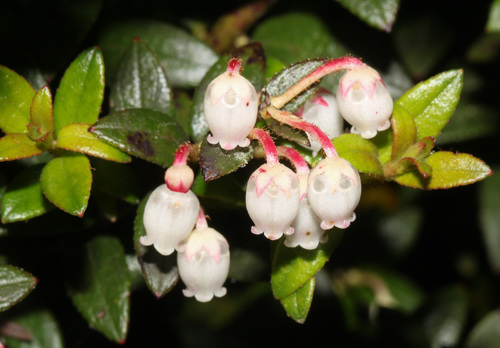
At a glance
- Lifecycle
- Perennial (hardy)
- Exposure
- Full sun
- Frost limit
- −6.7 °C
Cultivation
Prefers a cool moist but not boggy humus rich soil in shade or semi-shade. This species only tolerates light and short-lived frosts so it is not very hardy in Britain. It can, however, be grown in a sheltered position outdoors in the mildest areas of the country. There is some confusion over the naming of this species, the reports on the plants uses were listed under Pernettya prostrata and we are not sure that G. myrsinoides is the correct current name for the species. Closely related to G. pumila leucocarpa. This is an interesting plant for the rock garden. Dioecious. Male and female plants must usually be grown if seed is required. This species, however, does not need a male pollinator in order to fruit well. Plants in this genus are notably resistant to honey fungus.
Propagation
The seed requires a period of cold stratification. Pre-chill for 4 - 10 weeks and surface sow in a lime-free compost in a shady part of the greenhouse and keep moist. The seed usually germinates well, usually within 1 - 2 months at 20°c, but the seedlings are liable to damp off. Watering them with care and making sure they get ample ventilation will reduce this risk. Watering them with a garlic infusion can help to prevent damping off[K]. Prick out the seedlings into individual pots when they are about 25mm tall and grow them on in light shade in the greenhouse for at least their first winter[K]. Plant them out in late spring or early summer. The seedlings are susceptible to spring frosts and so it might be wise to give them some protection in their first spring or two outdoors.. Cuttings of half-ripe wood 3 - 6cm long, July/August in a frame in a shady position. They form roots in late summer or spring. A good percentage usually take. Division in spring just before new growth begins. 'Drop' the plants 12 months earlier by digging them up and replanting them deeper in the soil so that the branches are buried and can form roots. This works best in a sandy soil. It is best to pot up the divisions and grow them on in a lightly shaded position in the greenhouse until they are established. Plant them out in the summer. Layering in September/October. Takes 12 months.
Edible uses
Fruit - raw or cooked.
Material uses
A good ground cover plant for a sunny position or light shade, forming dense thickets.
Habitat
Not known
Native range
S. America - Costa Rica to the Andes of N. Chile.
Scientific synonyms Pernettya prostrata